Uses
Industrial ventilation systems, dust collection and exhaust systems, and air conditioning supply and exhaust ductwork projects.
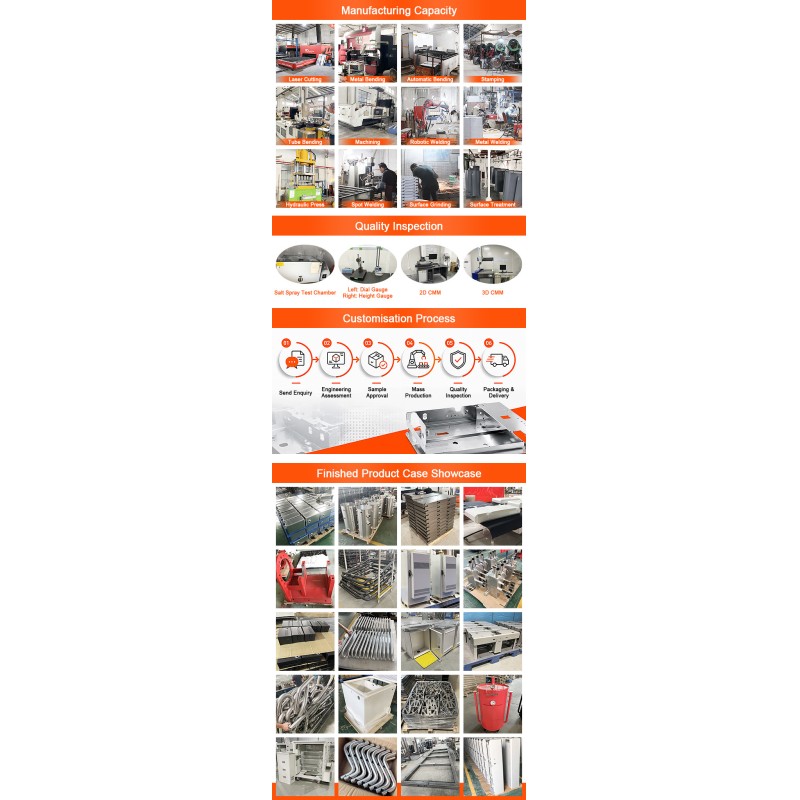
One-Stop Sheet Metal Solutions, From Concept to Production
- Product Development Support
We help turn product concepts into manufacturable products.
- DFM Cost Optimization
We reduce production costs through design and process optimization.
- Consistent Quality Control
We maintain consistent dimensions and quality from prototyping through mass production.
- Multi-Process Integration
We minimize communication overhead associated with working with multiple suppliers.
- Flexible Production Capacity
We accommodate both small-batch pilot production and mass production needs.
- Dedicated Project Management
We provide end-to-end project management and rapid communication and response.
FAQ
Q1: How are reducer ducts fabricated?
A1: The sheet metal is cut, bent, and seamed, resulting in a size difference between the two ends.
Q2: How are they adapted to various duct systems?
A2: The ends are custom-made as needed and connect directly to the existing ductwork.
Q3: How is an airtight seal ensured at the joints?
A3: The duct ends are flanged and fitted together, ensuring a tight contact surface and a strong seal.
Q4: What factors should be considered when selecting sheet metal materials?
A4: Strength, corrosion resistance, formability, the operating environment, and cost should all be taken into account to achieve optimal product performance and cost-effectiveness.
Q5: How does the bending radius affect the quality of sheet metal fabrication?
A5: A proper bending radius helps prevent material cracking, improves dimensional accuracy, and ensures consistent forming quality.
Q6: How can deformation during sheet metal welding be minimized?
A6: By optimizing weld design, controlling the welding sequence, and using specialized fixtures, welding deformation can be effectively reduced and assembly accuracy improved.


